Variable Data / VDP
WashU Medicine Rebrand
A campus-wide stationery rebrand built as a FusionPro variable-data system: every envelope, card, and letterhead a templated form any department can self-order, press-ready.
- Year
- 2024 - 2026
- Role
- Production Designer (VDP)
- Tools
- FusionProInDesignAcrobatWeb-to-Print
- VDP
- FusionPro
- PRESS-READY
At a glance
- Trim
- No bleed · held at trim size
- Digital press
- Fujifilm J Press 750HS (29×23″)
- Short-run / cards
- Revoria PC1120 · Xerox 800 iridesse
- Finishing
- Chop-cut for fulfillment
- Color
- Pantone 200C → CMYK via PitStop Pro
The goal
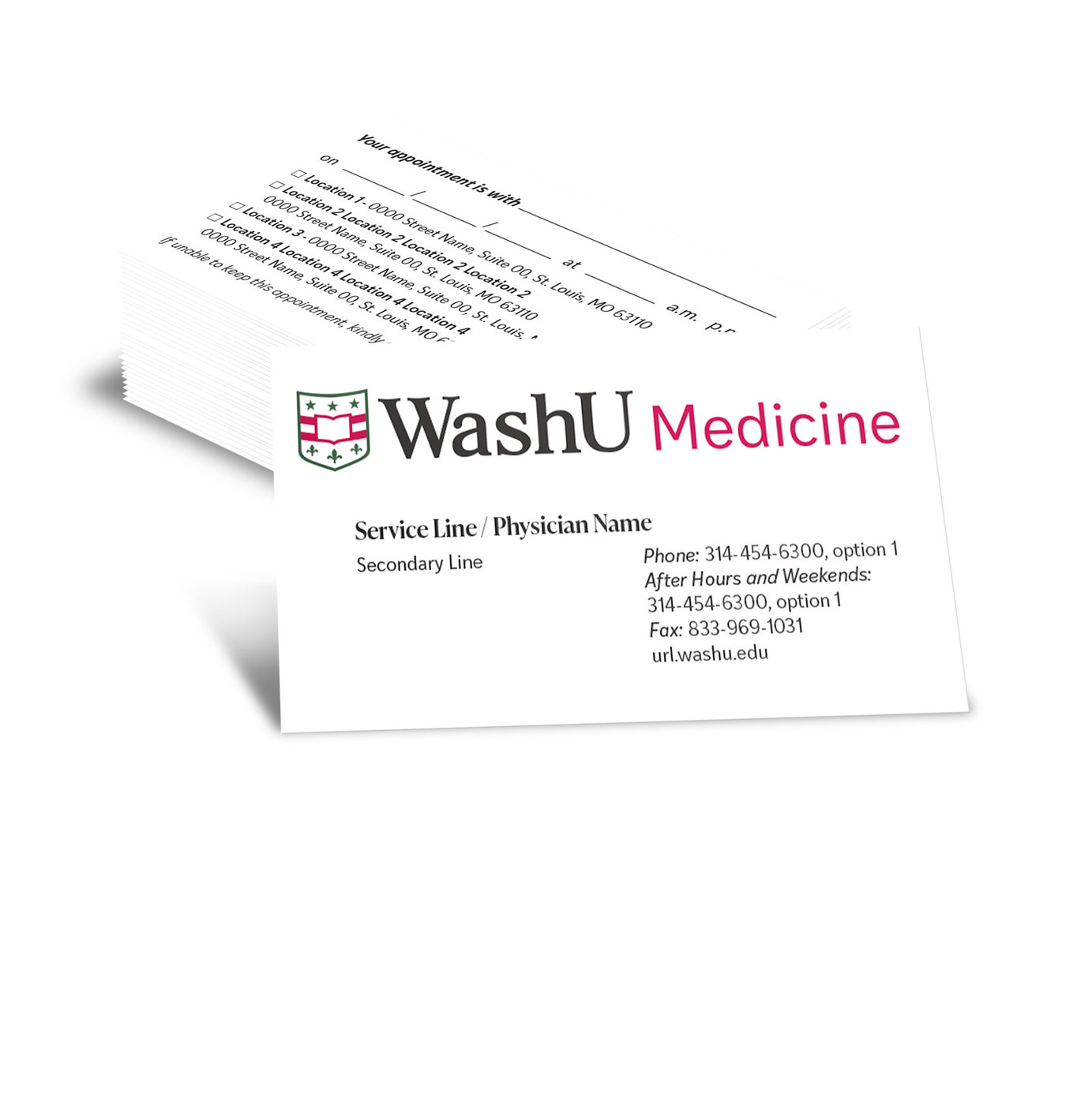
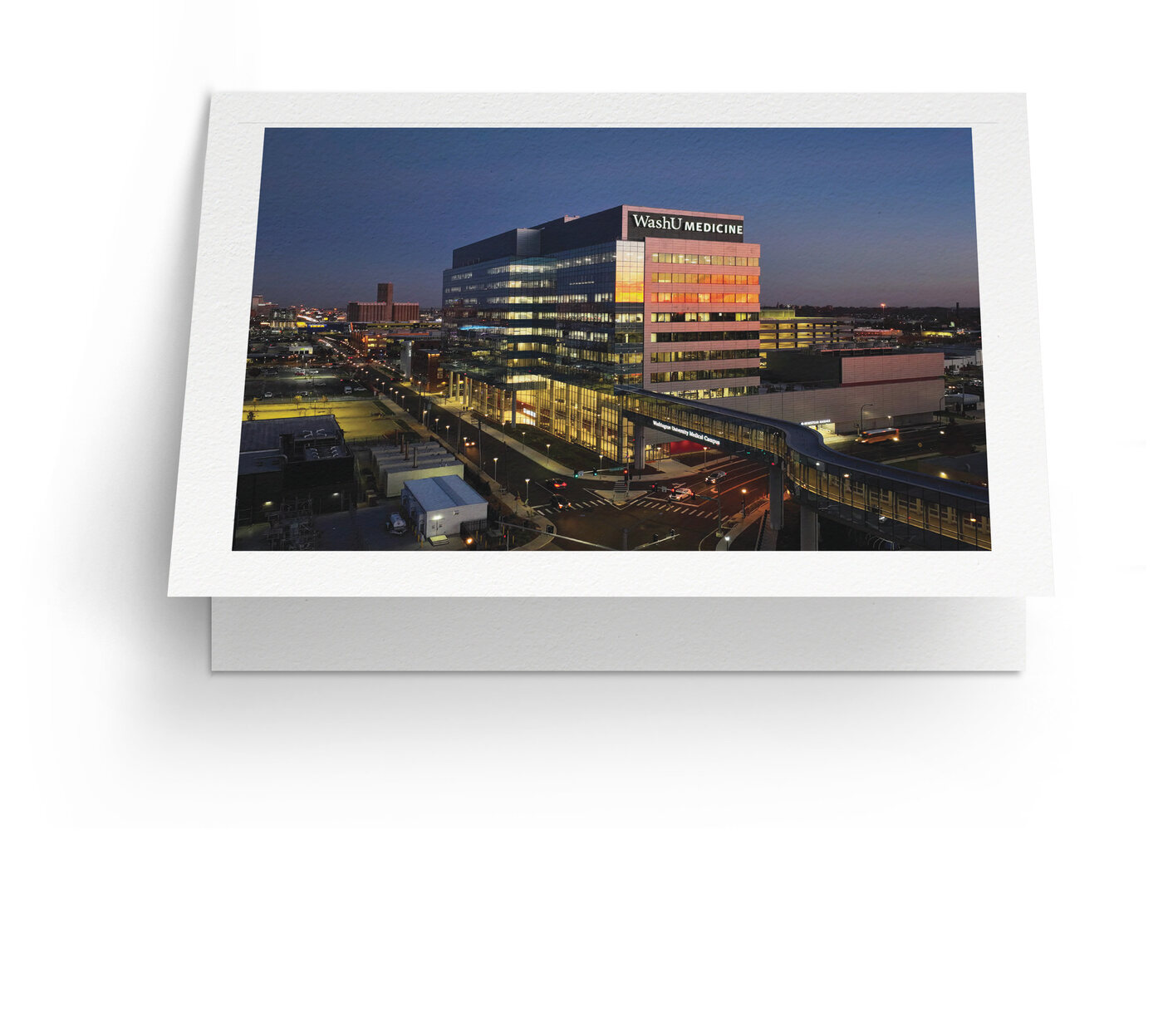
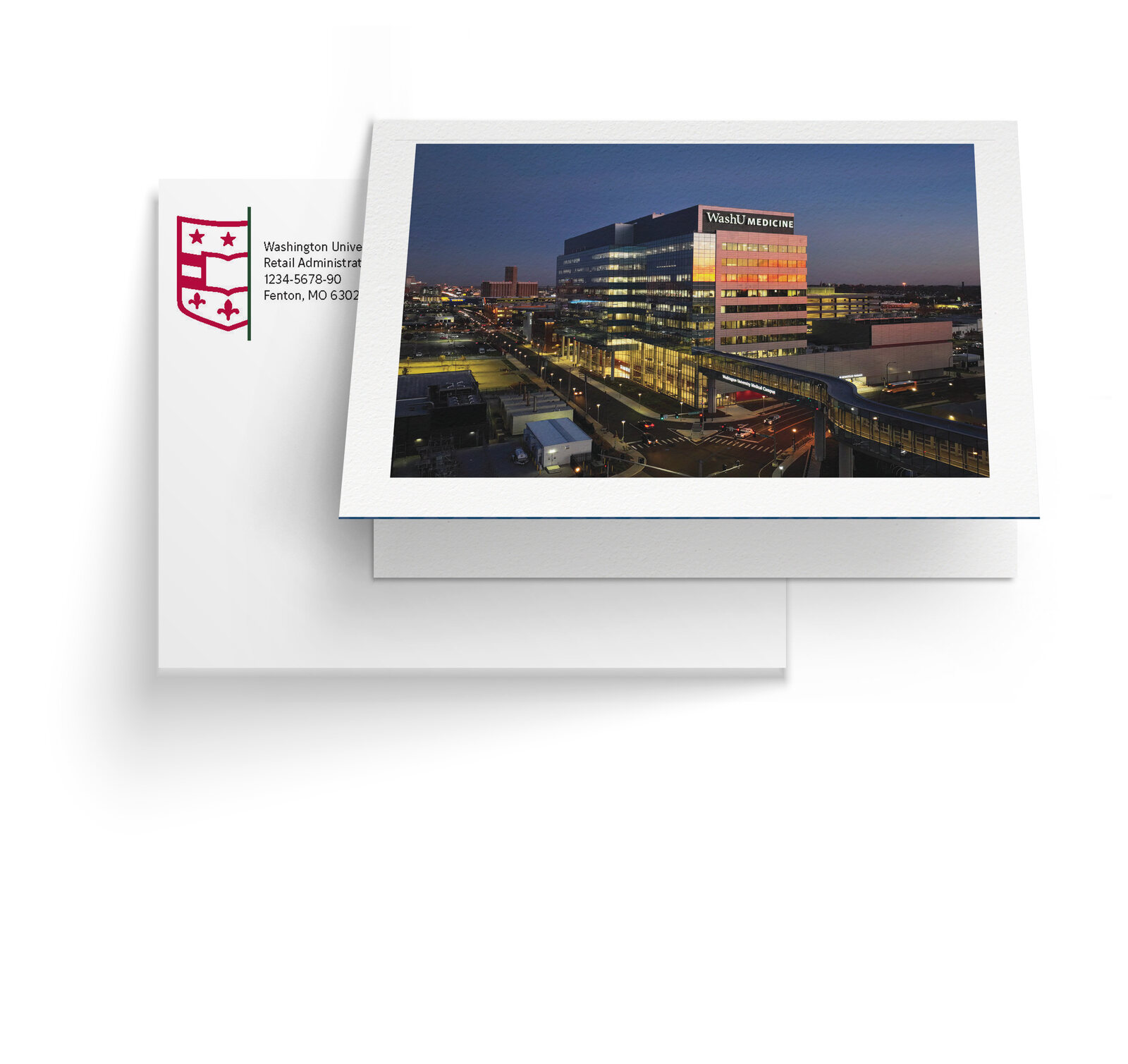
A medical-school rebrand for WashU Medicine had to roll out across an entire stationery system: A7 and window envelopes, clinical business cards with an appointment-reminder back, 5”×7” folded notecards, sticky notepads, and Monarch letterhead. Every piece carries the same brand but different copy, namely each office’s name and its own multi-line address block, across dozens of departments. Setting each one by hand is hundreds of near-identical files and a brand that drifts the moment someone edits the wrong layer.
The approach
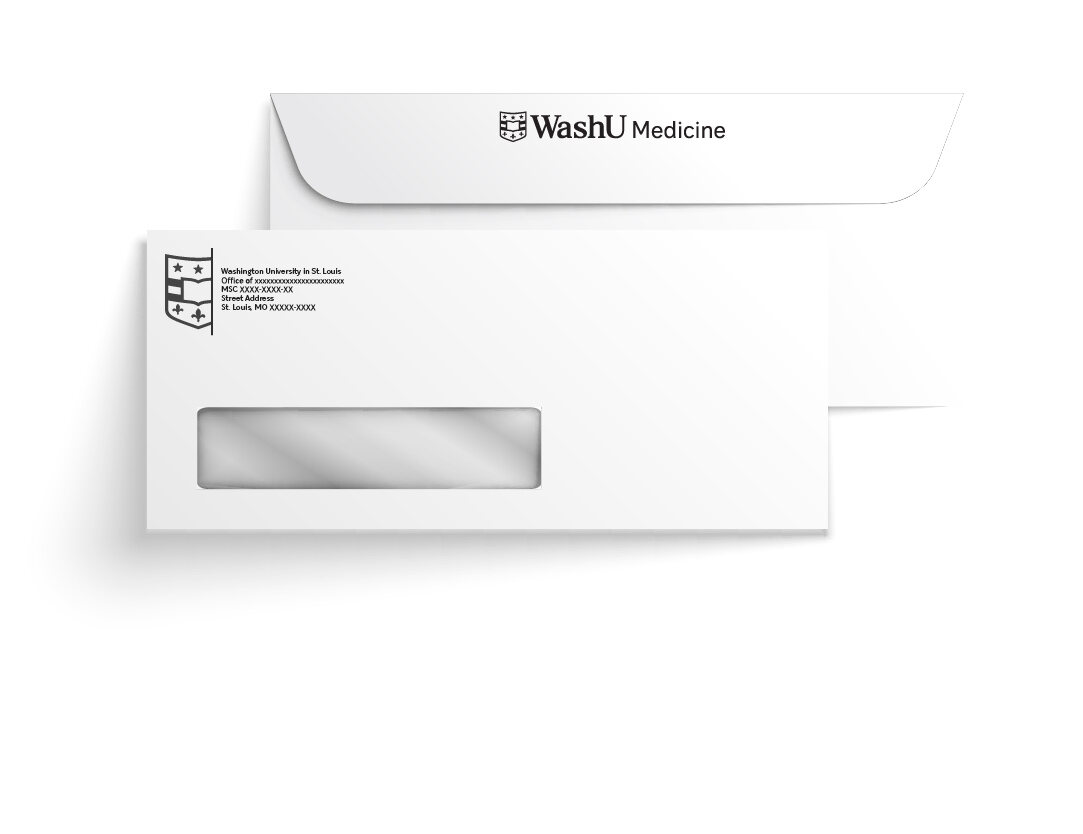
I built each piece as a FusionPro variable-data template driven by a structured field set (Office of, Street Address, Address Line 2, City, State, Zip), so the layout, type, and brand stays locked and only the data varies. The templates plug into a web-to-print ordering form with per-field required/optional rules and prompts, so a department orders its own envelope or card by filling out a form and the press-ready PDF builds itself from the master.
Production detail
The real work is in the rules. Address Line 2 is optional, so the block has to reflow and stay optically aligned whether an office has two address lines or four, with no floating gaps and no overset. Required fields (street, city, state, zip) are enforced at the form, so an incomplete record can’t reach the press. The rebrand’s typography, CMYK color build, bleeds, and trim are baked into each master, so every generated variant lands press-ready no matter how long the copy runs. One master per format proofs as a single approval, and the variable output is verified against the rules rather than by eyeballing thousands of records.
When the School of Public Health was renamed (Bursky), the same system absorbed it: new logo lockups (stacked, one-line, reverse, one-color) dropped into the existing templates without rebuilding the stationery from scratch.
On press, the system runs digitally. Higher-quantity orders image on a Fujifilm J Press 750HS, a 29”×23” digital sheet, and because all pieces have no bleed, the imposition/layout is chop-cut so bindery can hand off to fulfillment faster. Lower-quantity runs and business cards route to a Fujifilm Revoria PC1120 or a Xerox 800 iridesse instead. The one real color risk was the rebrand’s Pantone 200C: to keep it consistent through the CMYK conversion across all three devices, the build is corrected in PitStop Pro so the brand red lands the same on every press.
Outcome
A full WashU Medicine stationery system shipped as reusable variable-data templates: envelopes, business cards, notecards, notepads, and letterhead, each one press-ready and self-orderable by department. Brand locked, data variable.